Sitting for long hours can make the body feel surprisingly tired.
You may not be lifting heavy weights or doing physically demanding work, but after hours at a desk, the neck feels stiff, the shoulders feel tight and the lower back starts to complain.
This is becoming increasingly common for people who work on laptops, spend long hours in meetings, study for extended periods or use phones throughout the day.
The good news is that you do not need a full workout to feel better.
A few simple yoga stretches for desk workers can help improve mobility, reduce stiffness and make sitting more comfortable.
The goal is not to stretch aggressively.
It is to gently restore movement to areas that stay in the same position for too long.
Why Desk Work Creates So Much Tension
When we sit for long periods, certain muscles remain shortened while others work constantly to keep the body upright.
Over time, this can contribute to:
- Neck stiffness
- Tight shoulders
- Upper back tension
- Hip tightness
- Lower back discomfort
- Reduced mobility
- Poor posture habits
The problem is not sitting itself.
The bigger issue is staying in one position for too long.
Movement is the solution.
Even a few minutes every hour can make a noticeable difference.
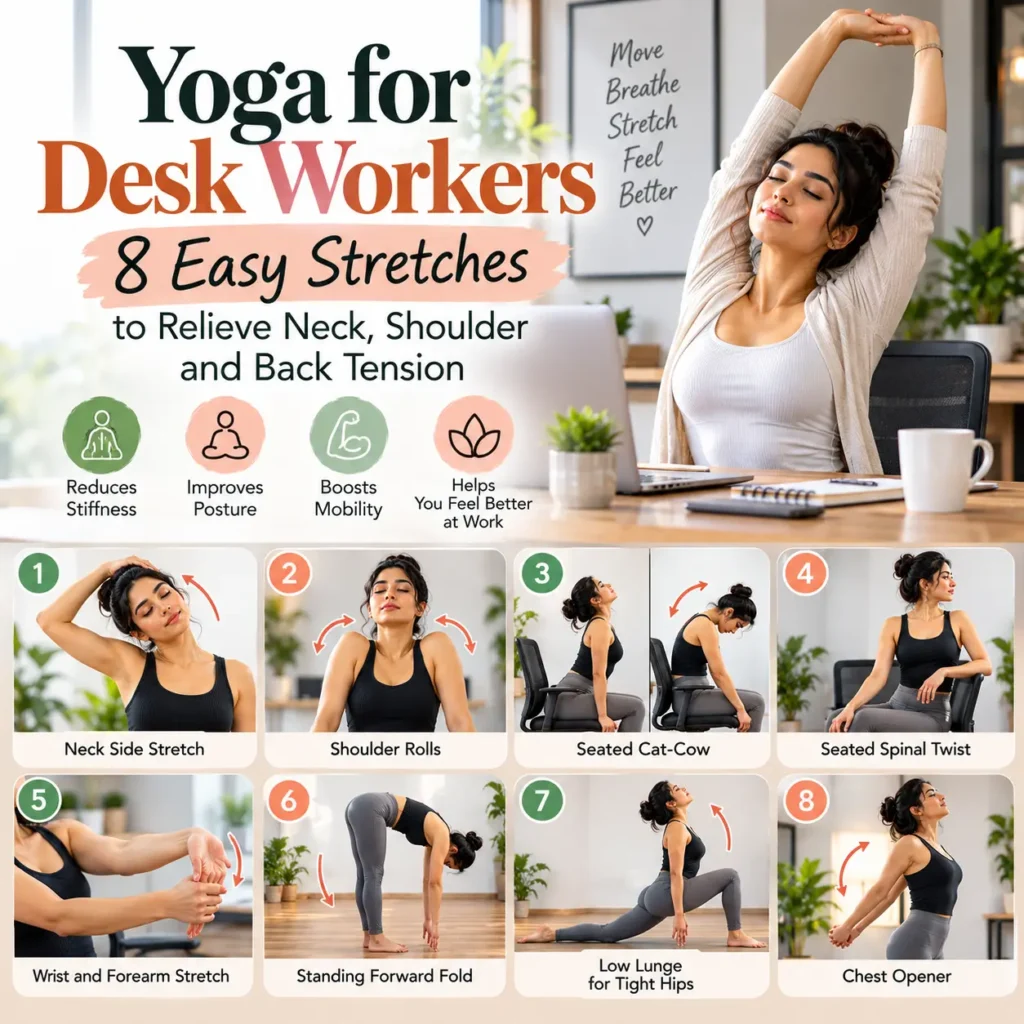
1. Neck Side Stretch
Sit tall in your chair.
Keep both shoulders relaxed.
Slowly tilt your head toward one shoulder.
Do not lift the shoulder toward the ear.
Hold for a few slow breaths.
Then return to the centre and repeat on the other side.
You should feel a mild stretch along the side of the neck.
Avoid pulling the head strongly with your hand.
Gentle pressure is enough.
This stretch is especially useful after long periods of looking at a screen.
2. Shoulder Rolls
Sit or stand comfortably.
Lift both shoulders toward your ears.
Roll them backward.
Then let them drop down.
Repeat five to ten times.
After that, reverse the direction.
Shoulder rolls are simple, but they are effective because many people unconsciously keep their shoulders lifted during stressful work.
This movement helps release some of that tension.
3. Seated Cat-Cow
Sit near the front of your chair.
Place your hands on your thighs.
As you inhale, gently lift the chest and allow the spine to arch slightly.
As you exhale, round the back and let the head move forward.
Continue slowly.
This movement helps introduce motion into the spine without needing to leave your desk.
It can be especially useful when the back feels stiff after several hours of sitting.
4. Seated Spinal Twist
Sit upright with your feet on the floor.
Place one hand on the opposite thigh and the other hand behind you.
Slowly rotate your upper body.
Keep the movement comfortable.
Take a few breaths.
Then return to the centre and repeat on the other side.
Twisting can help improve mobility through the upper and middle spine.
Avoid forcing the rotation.
Move only as far as feels natural.
5. Wrist and Forearm Stretch
Typing and using a mouse can create tension in the wrists and forearms.
Extend one arm forward with the palm facing upward.
Use the opposite hand to gently draw the fingers downward.
Hold for a few breaths.
Then turn the palm downward and repeat.
Switch sides.
This simple stretch can be useful for people who spend several hours typing each day.
Keep the pressure light.
6. Standing Forward Fold
Stand behind your chair or beside your desk.
Keep the knees slightly bent.
Slowly fold forward from the hips.
Allow the head and arms to relax.
If reaching toward the floor feels uncomfortable, place your hands on your thighs or desk.
Stay for a few breaths.
This stretch can help release tension through the back of the legs and lower back.
Rise slowly when you finish.
7. Low Lunge for Tight Hips
Sitting can make the front of the hips feel tight.
Step one foot forward and lower the back knee if you have enough space.
Keep the chest lifted.
Gently move the hips forward.
You should feel a mild stretch through the front of the back hip.
Stay for a few breaths.
Then switch sides.
If kneeling is uncomfortable, you can perform a standing version by stepping one foot back and bending the front knee.
8. Chest Opener
Stand upright.
Interlace your fingers behind your back or place your hands behind you.
Gently draw the shoulders back.
Lift the chest slightly.
Avoid forcing the arms upward.
This movement helps counter the rounded posture that often develops while working at a computer.
Take several slow breaths.
Then release.
Try This 5-Minute Desk Yoga Routine
You do not need a long session.
Try this simple routine:
1 minute: Shoulder rolls and neck stretches
1 minute: Seated Cat-Cow
1 minute: Seated spinal twist
1 minute: Wrist and forearm stretches
1 minute: Standing forward fold and chest opener
Repeat this once or twice during your workday.
It can be enough to break long periods of stillness.
The 30–60 Minute Movement Rule
One of the best habits for desk workers is simple:
Do not stay completely still for hours.
Try to stand up or move every 30 to 60 minutes.
Walk to get water.
Stretch your shoulders.
Stand during a phone call.
Take a short walk.
Even small movement breaks can help reduce stiffness.
A perfect posture cannot fully compensate for sitting in the same position all day.
Movement matters more.
Check Your Desk Setup
Yoga can help, but your workspace also matters.
Make sure your screen is positioned at a comfortable height.
Keep your feet supported.
Avoid leaning forward for long periods.
Let the shoulders stay relaxed.
Keep frequently used items within easy reach.
You do not need a perfect ergonomic setup, but small adjustments can reduce unnecessary strain.
Do Not Wait Until You Feel Pain
Many people only stretch after discomfort becomes intense.
It is better to move before that happens.
Think of desk yoga as maintenance.
A few gentle stretches throughout the day can help keep the body mobile and comfortable.
Consistency works better than waiting for one long session at the end of the week.
Yoga and Stress at Work
Desk tension is not always purely physical.
Stress can also show up in the body.
People often tighten the jaw, lift the shoulders and hold their breath during difficult tasks.
Take a moment during the day to check your body.
Are your shoulders tense?
Are you breathing normally?
Is your jaw relaxed?
This small awareness is part of yoga too.
Yoga is not only about poses.
It is also about noticing what is happening in the body.
When to Be Careful
Gentle stretching should feel comfortable.
Stop if you experience sharp pain, numbness, tingling or increasing discomfort.
If symptoms are persistent or linked to an injury, seek advice from a qualified healthcare professional.
Yoga can support mobility, but it should not replace proper assessment when symptoms are serious.
Final Thoughts
Desk work does not have to mean constant stiffness.
A few simple yoga stretches can help your neck, shoulders, back, wrists and hips feel better throughout the day.
The key is regular movement.
You do not need a yoga mat.
You do not need special clothing.
You do not need an hour.
Sometimes five minutes beside your desk is enough.
Your body is designed to move. Give it small opportunities to do that throughout the day.